Champagne and cheese: the pairings that actually work
For a long time, champagne was seen as something you drink before the meal, then set aside. That idea is shifting, and not just among sommeliers.
Champagne, especially from an independent grower with real aging behind it, has the structure, acidity, and complexity to carry a cheese course from start to finish. You just need to know what to put in front of it.
Why champagne works so well with cheese
The natural acidity cuts through the fat in soft cheeses and lifts aged ones. The bubbles reset the palate between bites. And the time spent aging on lees brings brioche and butter notes that speak directly to rind, texture, and salt.
This isn't complicated gastronomy. It's sensory logic.
Our favorite pairings, cuvée by cuvée
Cuvée Terrienne, three varieties, with Langres
Langres is a washed-rind cheese from Burgundy: powerful, salty, with a slight bitter finish. Its intensity calls for a champagne with character but no aggression. Cuvée Terrienne, a blend of Chardonnay, Pinot Noir, and Pinot Meunier, has the roundness and depth to hold its ground without overpowering. A straightforward, generous pairing.
Blanc de Blancs 2016 with Délice de Bourgogne or Brillat-Savarin
Both are triple-cream cheeses, among the richest you'll find. Melting texture, intense milky flavor, an almost sweet finish. Against them, you need a champagne with precise acidity and clean minerality. The Blanc de Blancs 2016, made entirely from Chardonnay and aged long on lees, is exactly that. The acidity cuts the fat, the minerality adds length, and the two lift each other.
Cuvée Nude Brut Nature with fresh goat's cheese
Zéro dosage, with its natural tension and brightness, is the ideal match for a lightly acidic fresh chèvre. Both share the same liveliness, the same directness. A pairing of resemblance that works beautifully as an opener or a light first course.
Cuvée charpentée, a full-bodied champagne with 24-month Comté
Long-aged Comté develops hazelnut, caramel, and warm spice. A champagne with several years on lees, showing toasted and brioche notes, enters into direct conversation with those flavors. A long, complex pairing that holds up across an entire evening.
One thing to remember
Champagne isn't an aperitif wine. It's a full table wine, capable of carrying an entire meal when given the chance. A cheese course is the simplest and most convincing proof of that.
Serve it cool, not ice cold. Between 8 and 10 degrees Celsius. And bring the cheese to room temperature at least an hour before serving.
If you're traveling in Europe
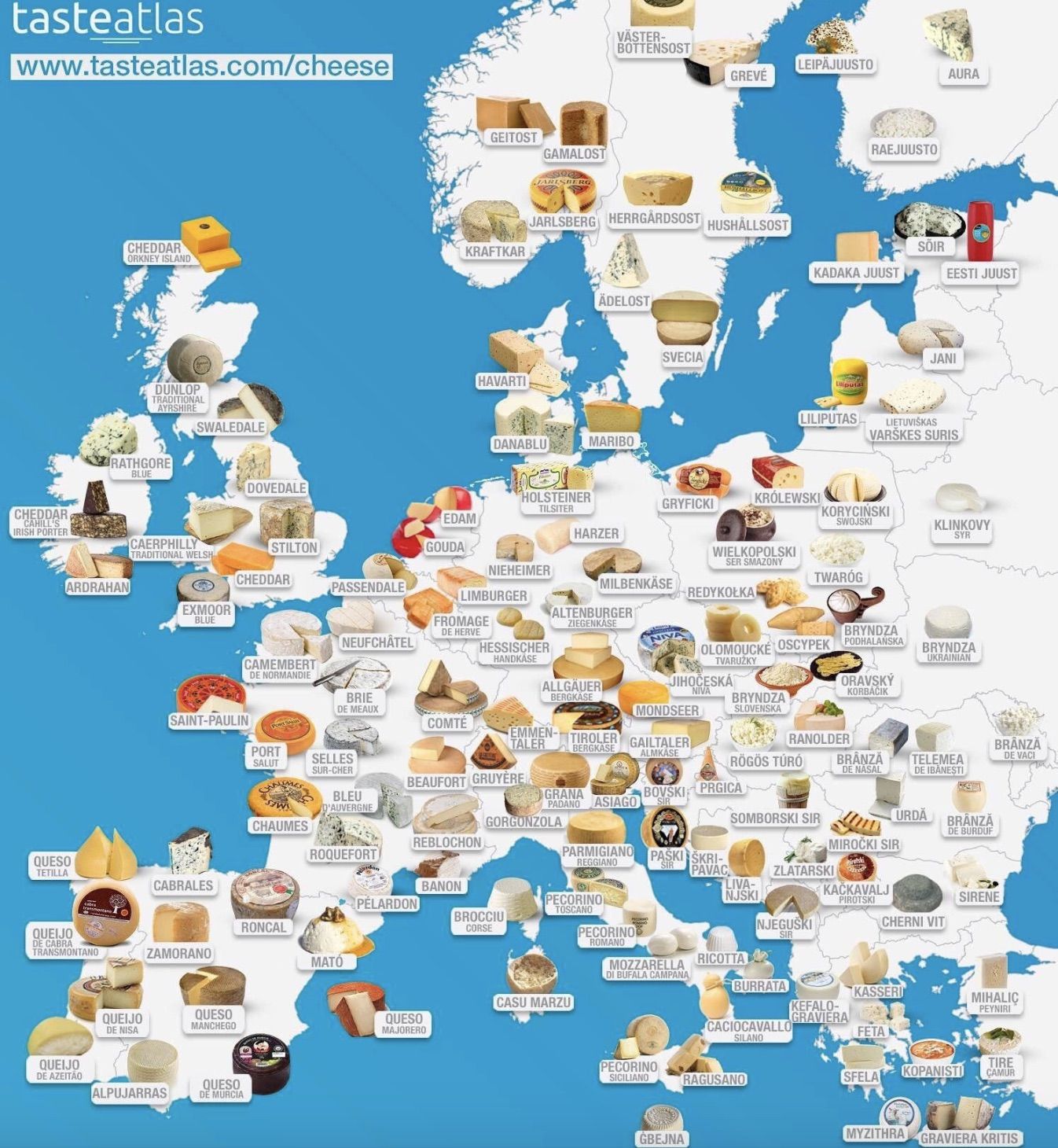
France has no shortage of cheeses worth pairing with. But so does the rest of Europe. Whether you're in Italy reaching for a young Pecorino, in Spain with a Manchego, in the UK with a well-aged Cheddar, or in the Netherlands with a mature Gouda, the same principles apply: match the weight of the cheese to the structure of the cuvée, let acidity do the work, and trust the bubbles to reset the palate.
The geography of great cheese and the geography of great champagne don't always overlap. But when you bring them together at the table, they speak the same language.
Curious about which cuvée to pair with your favorite local cheese? Check out the map: